
The Story of Materials
My relationship with materials did not begin in a studio. It began outdoors.
As a child, I spent time in tents, cabins, and campgrounds across New York, where leaving a place as I found it was simply part of being there. Later, traveling along both the eastern and western coasts of the United States reinforced that relationship with place: take little, disturb little, and understand that entering an environment carries responsibility.
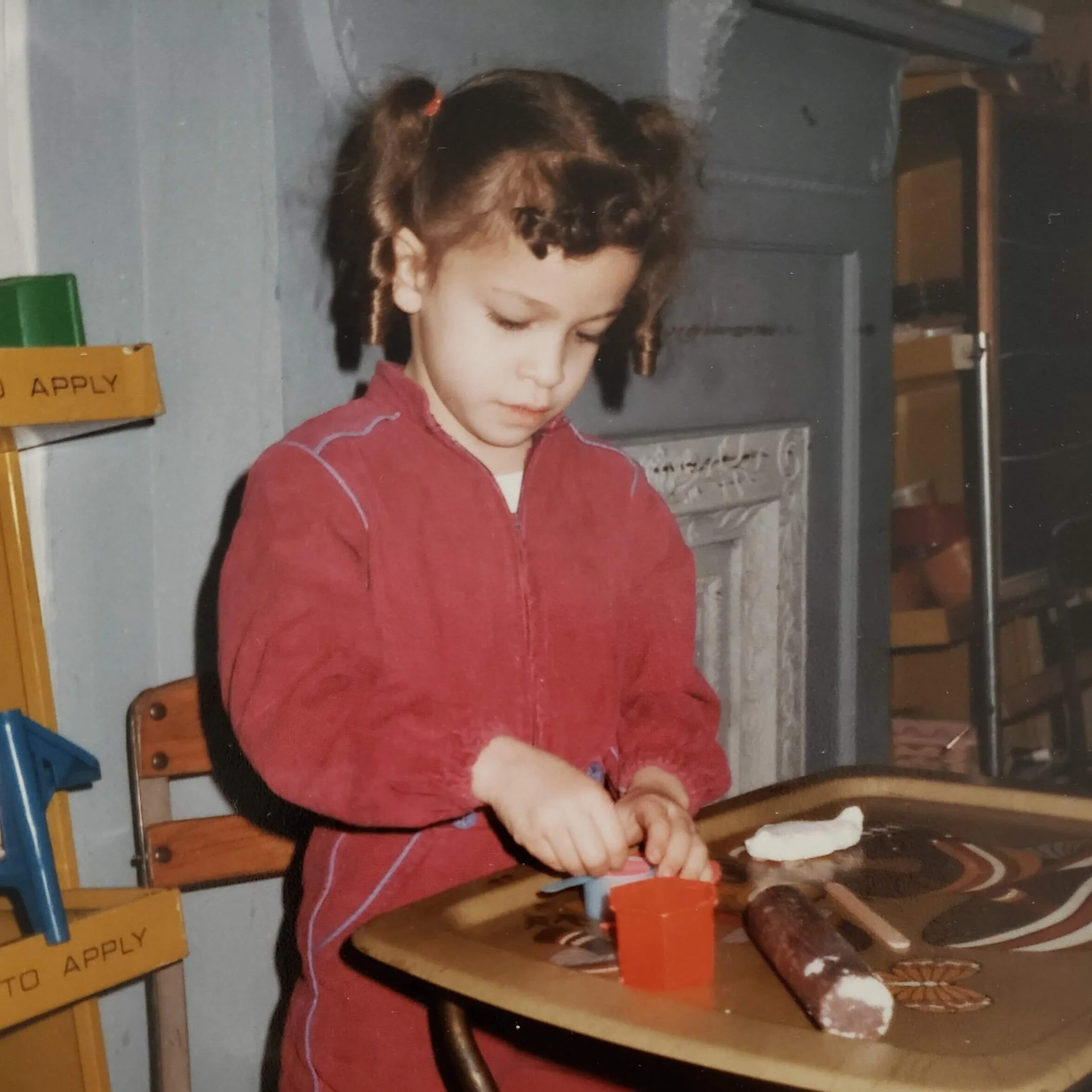
As I grew older and traveled more widely, that understanding expanded. Living and traveling through Europe while I was in the military exposed me to different relationships between people, built environments, and green space. I began thinking about environments not only as forests, coastlines, and other natural places, but as spaces shaped by human decisions.
Eventually, that thinking followed me into the studio.
I don't consider myself a nature artist, although the natural world appears throughout my work. What has remained more consistent is an awareness that every material comes from somewhere, undergoes some kind of transformation, and eventually goes somewhere else. Making something does not exempt it from that cycle and resin made those questions particularly difficult.
I was drawn to resin because of what it could do with light. Its transparency let me build depth, suspend material, create layers, and alter how an object changed as someone moved around it. Few materials I encountered gave me the same relationship between surface, interior, light, and space.
At the same time, resin presented an obvious contradiction. The qualities that interested me artistically came from a synthetic material with environmental and health consequences I could not ignore.
So I began researching alternatives.
That search eventually led me to bio-based resin formulations made partly from renewable biological sources and agricultural materials rather than relying entirely on conventional petrochemical feedstocks. They offered another direction, but they did not eliminate the fundamental complications of working with resin.
There is no harmless resin. No single formulation works for everything I make. Different works require different physical properties, and selecting a material means considering how it cures, how it interacts with pigments and embedded materials, how it responds to light, and how it is likely to behave over time. That changed the way I thought about material responsibility.
I stopped looking for a perfect material and started asking better questions about the materials I was actually using. What does this particular work require? Where does the material come from? What precautions does it demand? How much waste will the process create? Can I incorporate remnants into another work? Can an existing or end-of-life material serve the purpose instead of something new?
Sometimes those questions affect what I choose. Sometimes they affect how I use what I have already chosen.
Waste resin can become test material or part of another work. Failed pours can provide information or sometimes become material themselves. Even sanding dust can be collected and considered for future use rather than automatically discarded. The same thinking extends beyond resin.
Paper, ink, pigments, substrates, packing materials, and the objects I incorporate into my work all carry their own histories and consequences. I have used recycled polyester surfaces because their durability and nonporous qualities allow processes that conventional papers cannot withstand. For photographic prints, paper becomes another set of considerations involving image quality, archival stability, manufacturing, and material sourcing. These decisions are rarely as simple as choosing between a “sustainable” material and an “unsustainable” one.
Every material asks something different of the work.
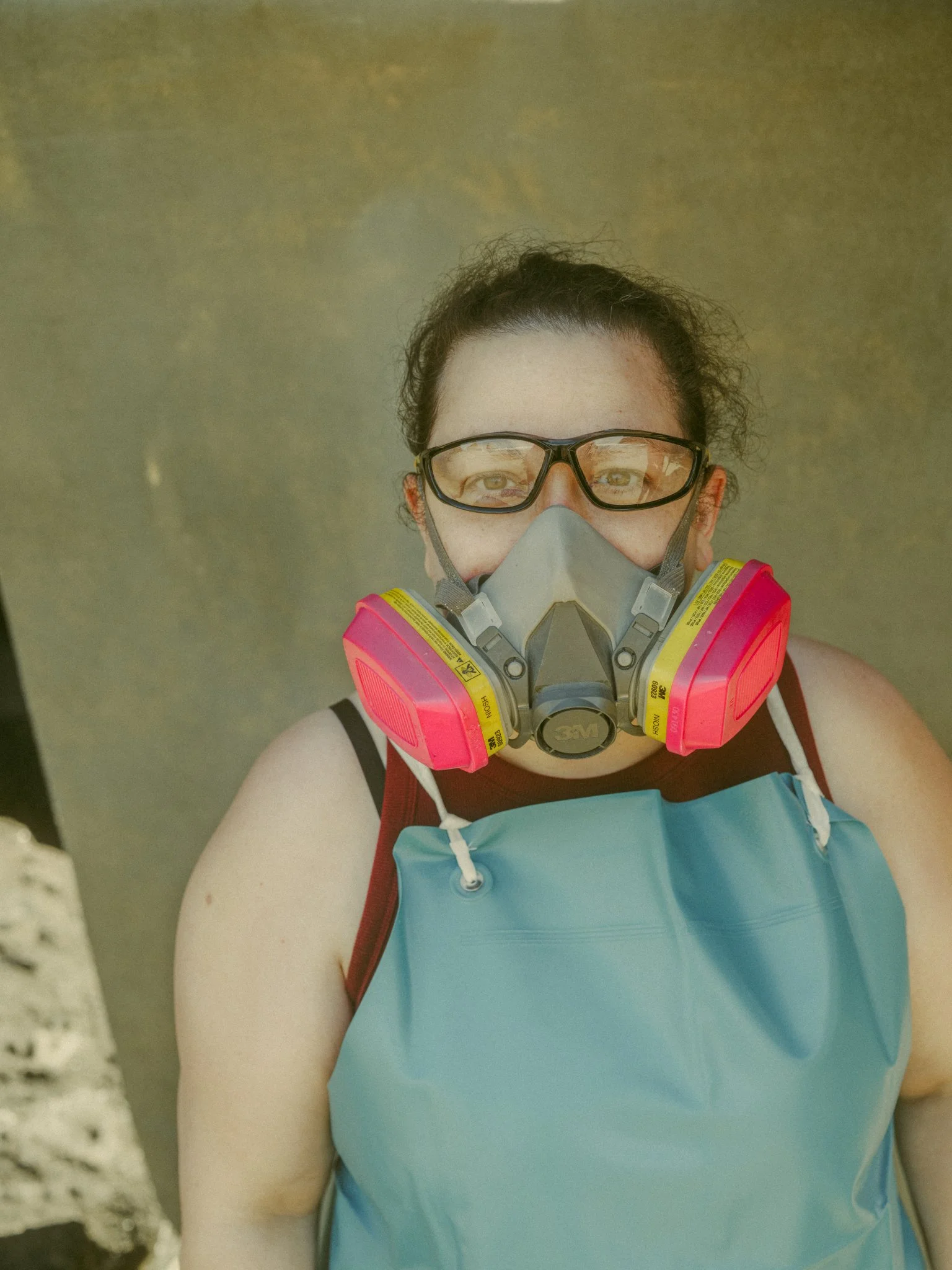
Portrait of Ava Bock by Kenji Shimizu
That complexity has become increasingly important to me as my practice develops. I am interested in incorporating more found, reclaimed, recycled, and end-of-life materials, particularly those connected to the places where I live and work. As I move between environments, I am increasingly curious about what it might mean for a work's material to carry something physically connected to its place of origin.
That could mean a found object, a reclaimed substrate, a locally sourced material, or even pigment developed from something encountered there. I don't yet know exactly what forms those experiments will take, and I don't want to prescribe the answer before the work exists.
What interests me is the possibility that material can function as more than a means of constructing an object.
It can become part of its memory.
That possibility connects directly to the way I already work. Resin can preserve, suspend, obscure, magnify, and contain. Paper records absorption and movement. Photographic surfaces hold encounters with light and place. Found materials arrive with histories that began before they entered my hands.
Material is never neutral.
Over time, I have become less interested in finding materials that allow me to call my practice sustainable and more interested in understanding the consequences of the choices I make. Sustainability, for me, is not a condition I expect the studio to ever meet. It is an ongoing process of questioning, reducing unnecessary consumption and waste, researching alternatives, and acknowledging the compromises that remain.
That approach requires accepting imperfection.
My studio cannot exist without consuming resources. My artwork cannot be made without materials. Even choices intended to reduce one kind of impact can introduce another. The responsibility lies in knowing that and continuing to pay attention. Looking back, I can trace that relationship much further than resin, sculpture, or even my decision to become an artist. It begins with learning how to enter a place, experience it, and leave without taking more than necessary.
The materials have changed, the question has not:
What does it mean to make something while remaining responsible for what making requires?
