
Rebuilding Through Art
When the world fell apart after Hurricane Helene, Ty Harvin of Whatcha Need Handyman Services in Asheville, North Carolina, was the first to show up. He arrived before the shock had fully worn off, helping us begin finding our footing when so much of what had been familiar was suddenly gone. Hope Burk of Allen Tate Real Estate followed, helping us find people we could trust to repair the damage and eventually sell our home when it became clear that starting over meant leaving it behind for good.
Those acts were practical, but they were also deeply human. In a period dominated by damage, uncertainty, and decisions we had to make quickly, people kept showing up.
A few months later, I received a WNC Emergency Relief Grant from the Craft Futures Fund through the Center for Craft. The grant allowed me to replace two essential pieces of studio equipment I had lost. When one of the manufacturers learned why I was replacing the equipment, the company added several additional tools to my order.
My alma mater, the University of North Carolina Asheville, also included my work in its holiday guide and shared my story through its social media channels. Collectors purchased work. People shared what had happened. Organizations supported artists and small businesses trying to recover.
More people helped than I could reasonably name here.
What I remember most clearly is that I was never truly alone.
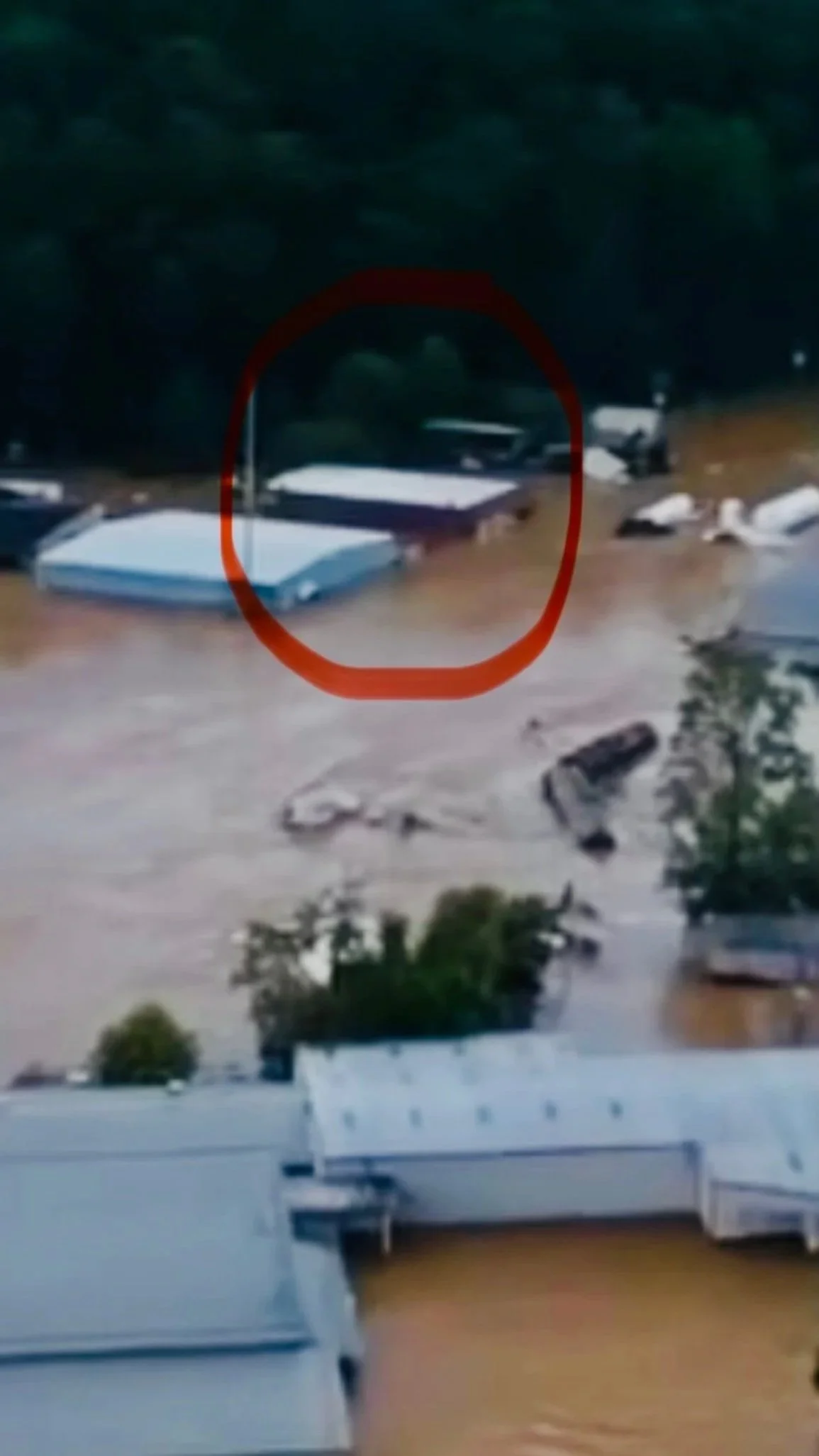
4 Mulvaney St. Studios, flooded during Hurricane Helene
The photograph of my former studio building remains difficult for me to look at. Water reached nearly to the upper floor. The physical space in which I had worked, along with tools and materials accumulated over years, had been fundamentally altered in a matter of hours. At first, rebuilding seemed straightforward: replace what had been lost, repair what could be repaired, and somehow return to work.
Then my father died.
He had been the reason for the westward trip that kept us away from Asheville when Helene arrived. After months of caregiving, displacement, repairs, and uncertainty, his death changed the meaning of returning to anything resembling the life I had before.
I stepped away from the studio for a while.
When I returned, I began to realize that rebuilding did not necessarily mean reconstructing what had existed. I had changed. My circumstances had changed. The work was changing as well.
The more useful questions became: What kind of artist am I becoming? What does my practice actually need? Which parts of the old structure still serve the work, and which ones am I rebuilding simply because they were there before?
Those questions extended beyond replacing equipment.
For years, my practice had moved among photography, drawing, painting, sculpture, and other forms of making. Losing the studio's physical infrastructure forced me to look more closely at what remained when many of the objects associated with being an artist were gone.
The answer was the practice itself.
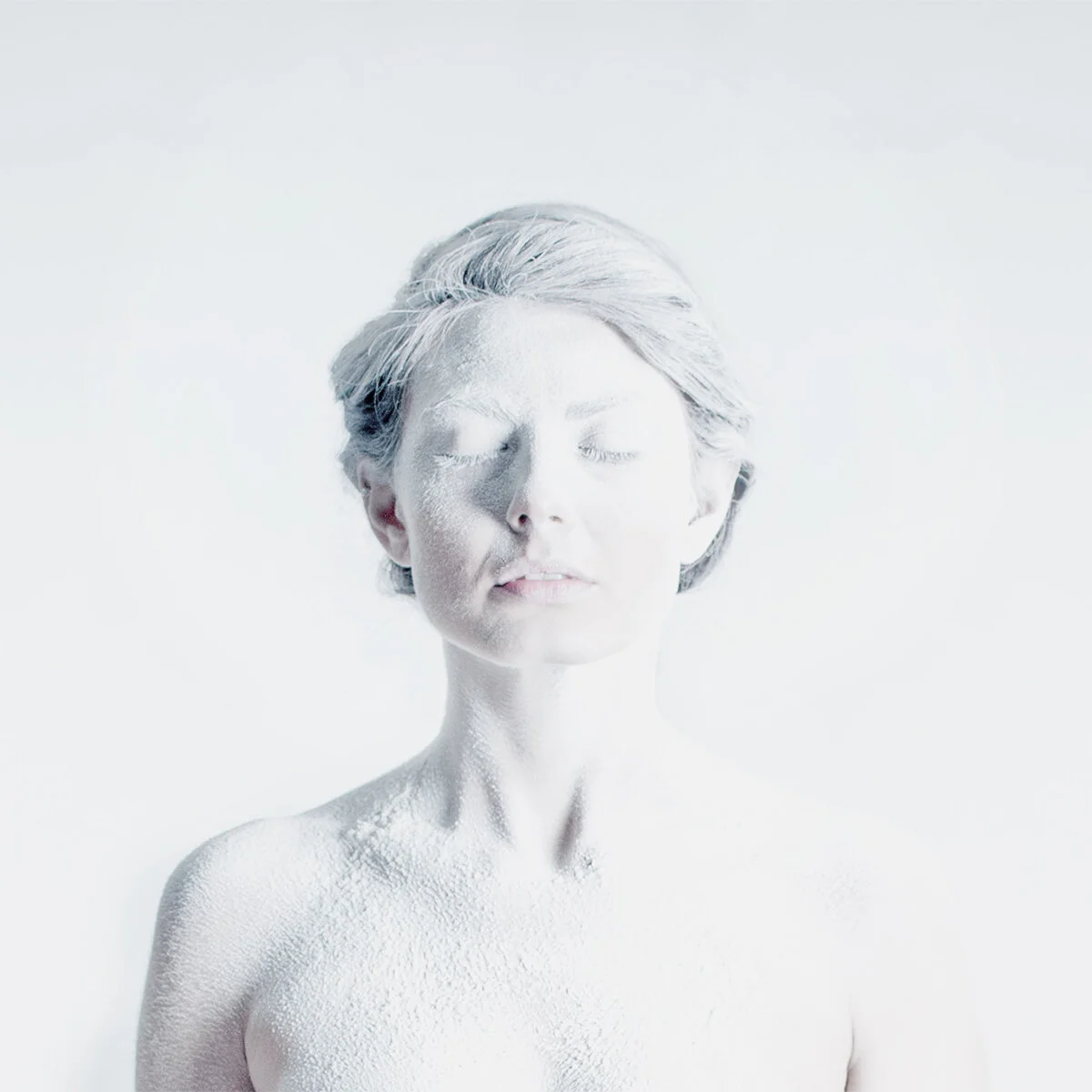
Foreshadowing,’ a conceptual portrait exploring disappearance, transition, and quiet transformation.
Foreshadowing was created long before Helene, but I see something different in it now. The figure appears to disappear into the surrounding white space, suspended somewhere between presence and absence. When I made the photograph, I could not have known the circumstances through which I would later view it.
That is one of the strange things about making autobiographical work. Meaning does not necessarily stop developing when an artwork is finished. Experiences that occur years later can change what I recognize in something I made before them.
The same is true of rebuilding.
I cannot reconstruct the studio, circumstances, or person I was before the hurricane and my father's death. I am no longer trying to.
What I can do is carry forward what remains useful: the work, the knowledge accumulated through making it, the relationships that helped sustain it, and a clearer understanding that a practice is larger than the physical space in which it happens.
That matters particularly now because my studio has never existed independently of the rest of my life. Places change. Materials change. Circumstances change. The work absorbs those changes, sometimes immediately and sometimes years later.
Looking back, the people who helped me after Helene did more than help replace what was lost. They gave me enough stability to decide what was actually worth rebuilding. I remain deeply grateful for that. I have learned that rebuilding does not always mean returning. Sometimes it means carrying the essentials forward and letting the rest change.
