Confrontation
This series is a sculptural act of witnessing.
Rendered in black and white, these works document the internal reality of chronic illness—its cuttings, its tremors, its weight. Each form is made through casting and carving polyurethane, a process of removal, shaping, and refusal.
There is no softness here. No metaphor. Only what remains when the body is forced to endure.
These sculptures do not ask for sympathy. They insist on presence. They hold space for truth that is often hidden: sharp, opaque, and unrelenting.
This series is not an offering. It is evidence.
(2019-2022)
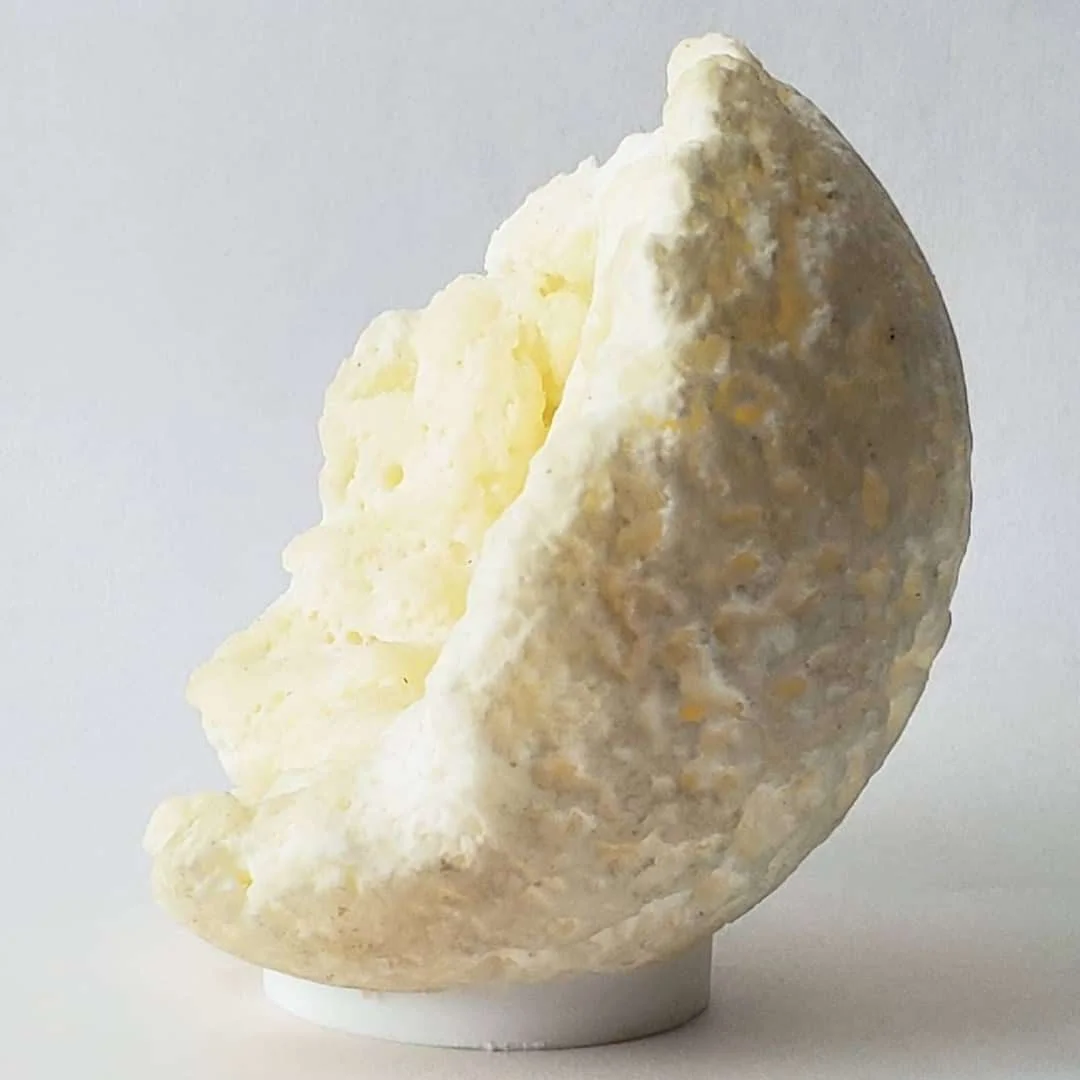
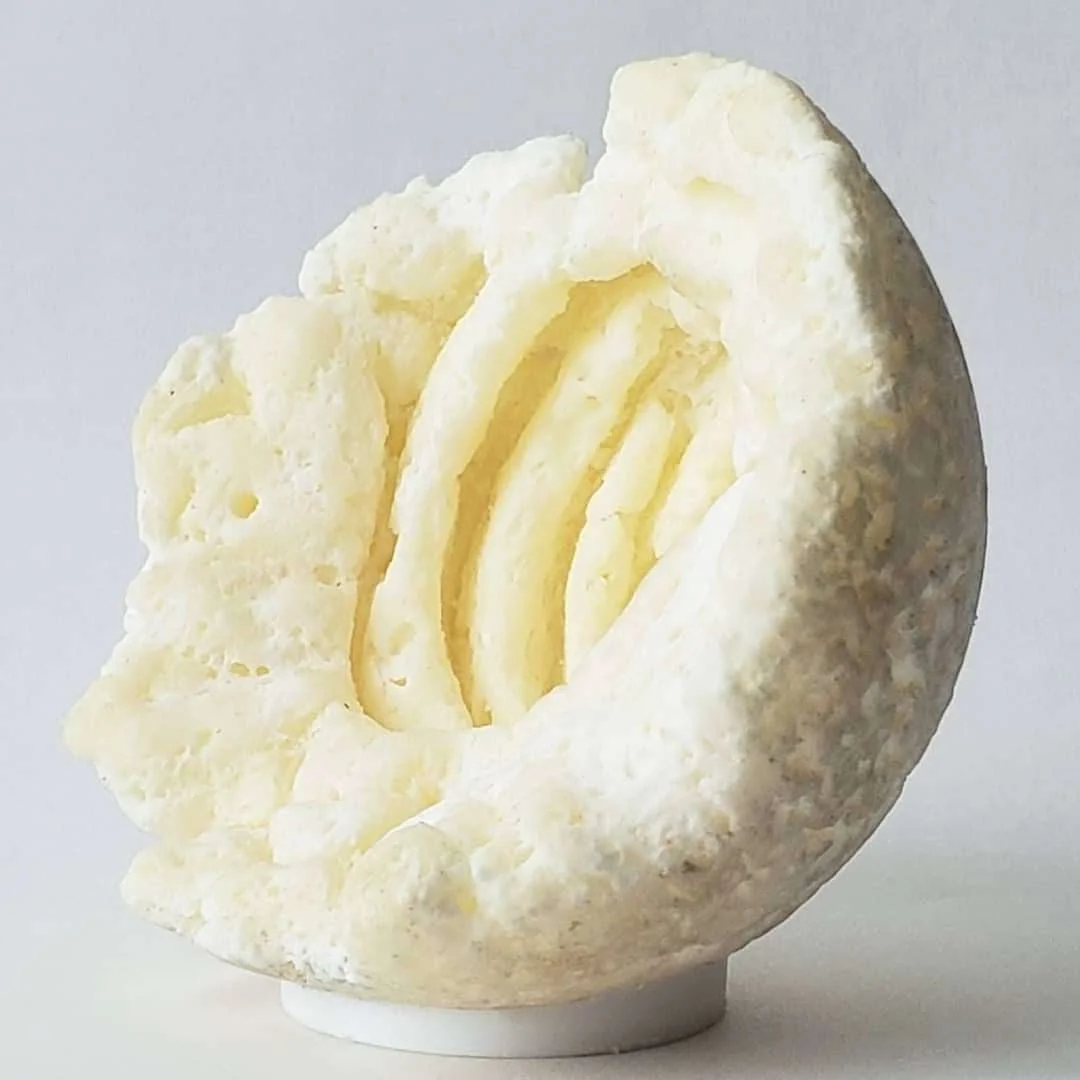
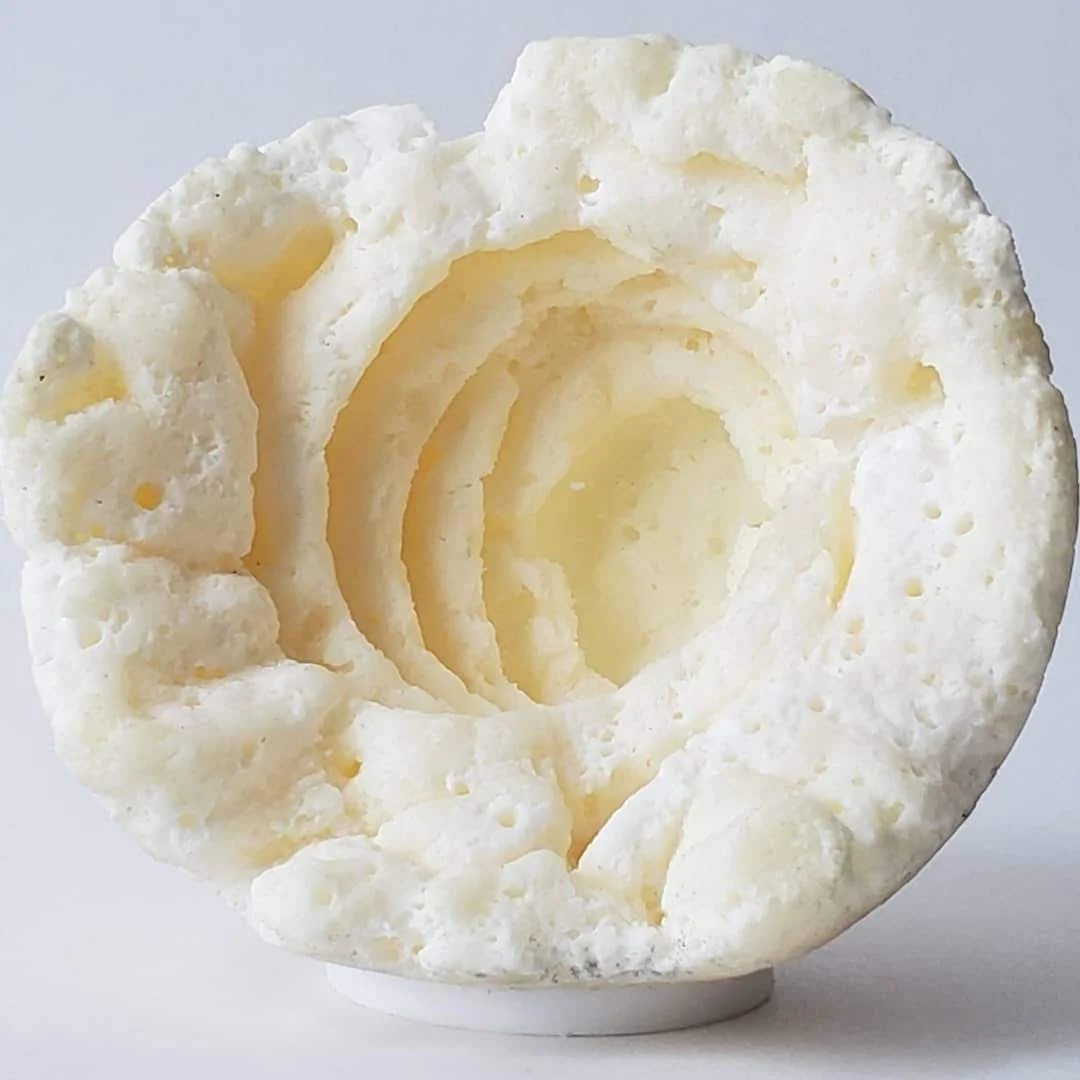
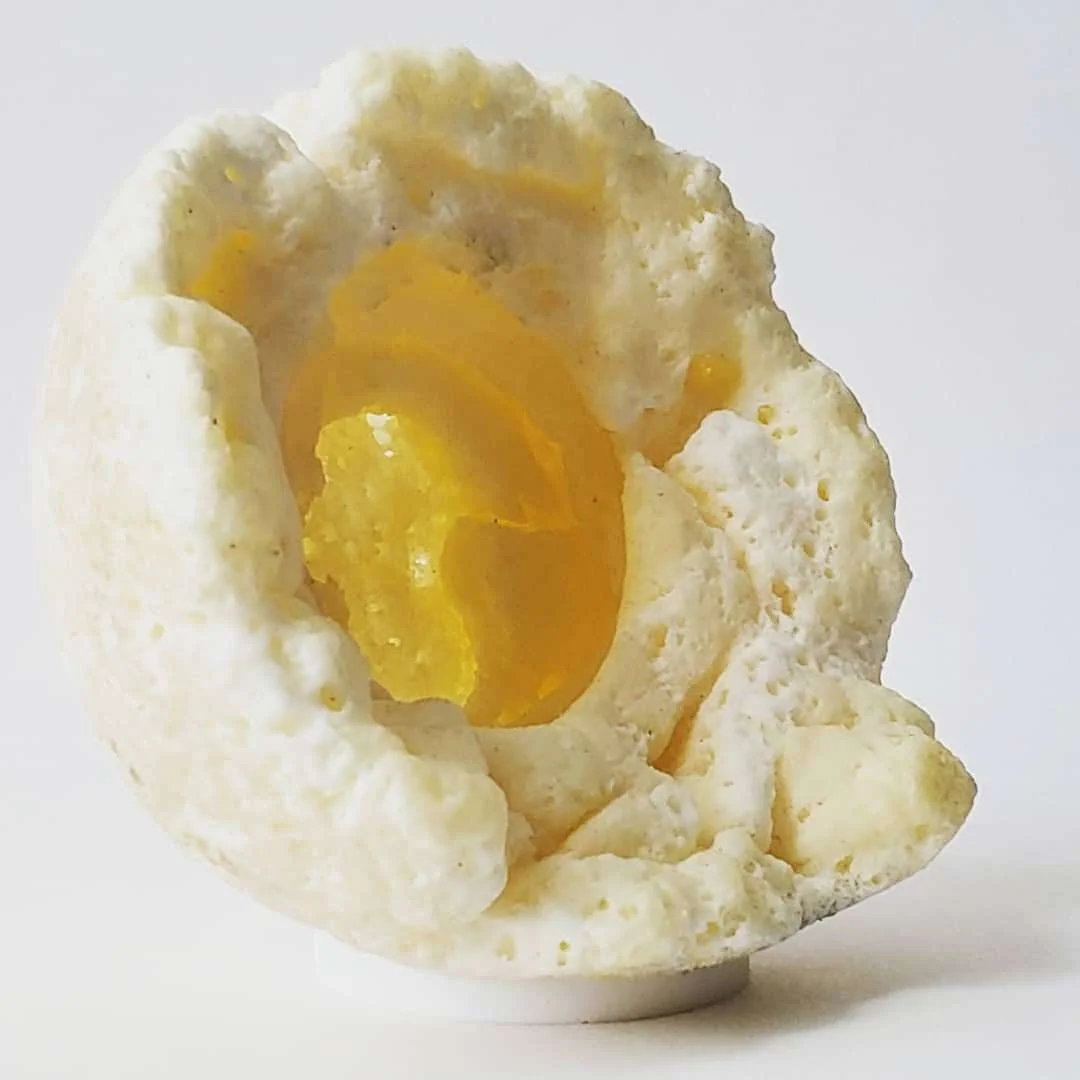
Inner Work
2019
Carved polyurethane
3.5 × 3.5 in (8.9 × 8.9 cm)
Inner Work turns the act of carving inward. Cut from a small polyurethane orb, the sculpture opens through a series of recessed forms, moving from a rough exterior toward increasingly protected interior spaces. The work makes what is normally concealed physically accessible, using removal as a means of examining what lies beneath the surface.

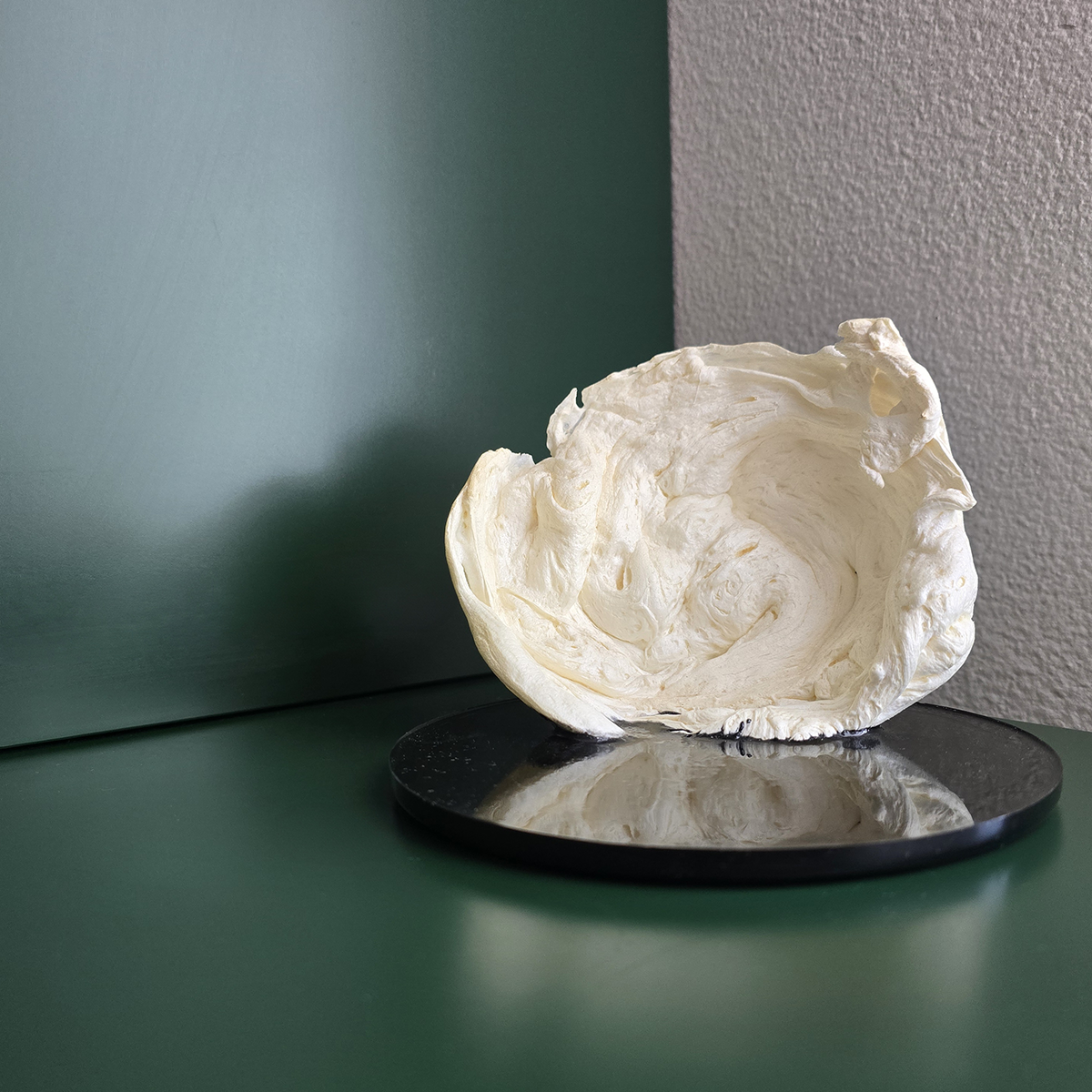
Reflection
2019 polyurethane sculpture
6 W × 6 D × 5 H in (15.2 W × 15.2 D × 12.7 H cm)
Reflection was created during a period when much of my work centered on looking inward and trying to understand experiences that had changed how I saw myself. I cast polyurethane into an orb, shifting and reorganizing material to create an irregular interior of folds, cavities, and openings. The orb was then set into a dark reflective polyurethane disk, allowing the carved form to encounter its own reflection. The work considers the difficulty of seeing ourselves clearly while we are still in the process of becoming who we are.
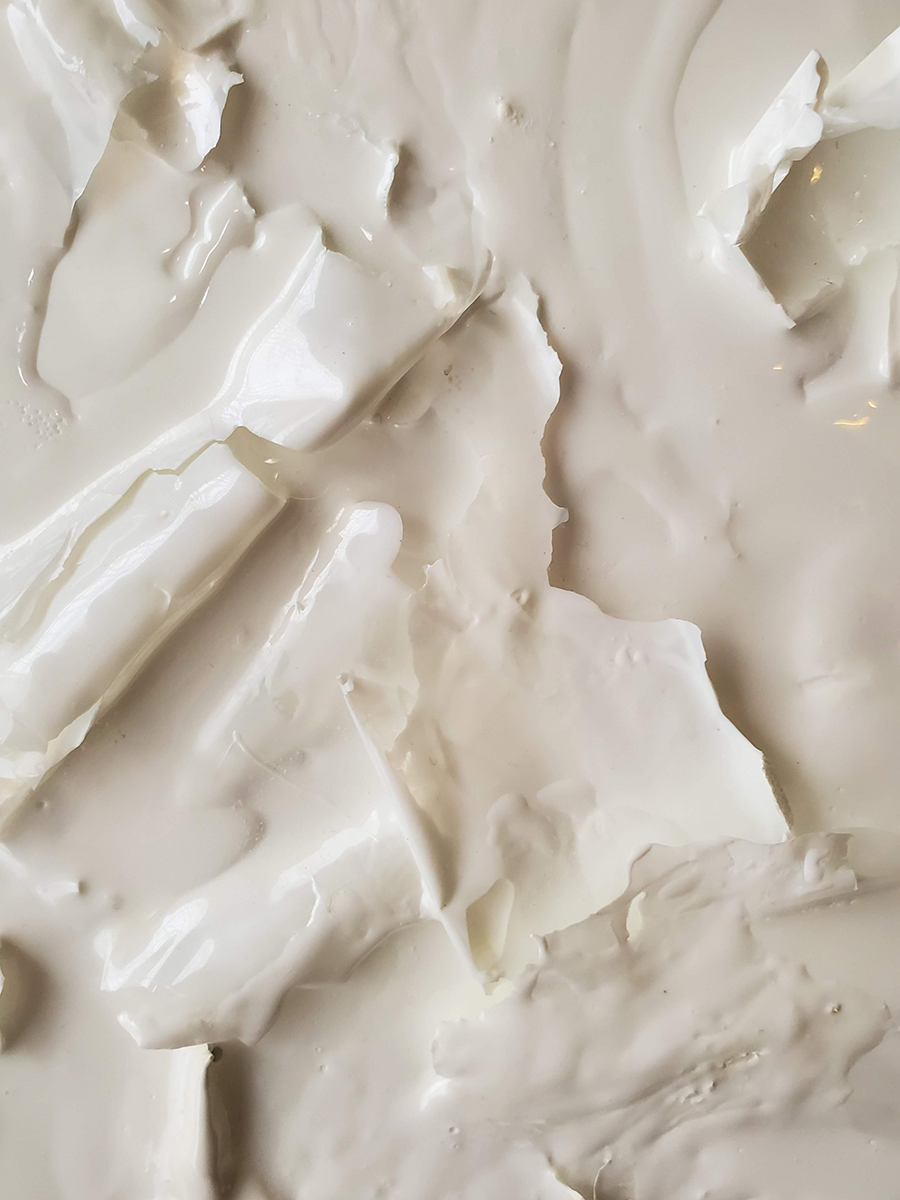
Release, 2019
Polyurethane relief on canvas
12 W x 36 H x .5 D in (30.48 x 91.44 x 1.27 cm)
NFS · Artist's Collection

Release is the only work in the Confrontation series that directly addresses my mental health, although I did not understand that when I created it. It is also my only work on canvas.
I created the entirely white surface as a single work over approximately sixteen hours. As successive pours of polyurethane began to cure, I gathered remnants of the material, shaped them while they were still changing, and embedded them back into the work before casting another layer. With each pour, what remained from the previous layer altered the movement of the next. The surface gradually became a record of accumulation: each intervention changing what could happen afterward.
At the time, I was working through intense fear and anxiety while trying to feel safe enough to explore what polyurethane could do when I relinquished some control over its movement. I did not yet understand the significance of that struggle. Seven years later, in 2026, I learned that I had previously been diagnosed with OCD. That knowledge changed my understanding of both the experience and the work I had made from within it.
Release now belongs to my personal collection. I live with it as a reminder that uncertainty does not negate meaning, that my experience of the world is real and has value, and that the parts of myself I once struggled to understand do not make me broken. The waves, fragments, interruptions, and redirections held within its surface have become evidence of something I understand differently now: uncertainty was never separate from the process. It was part of what shaped it.
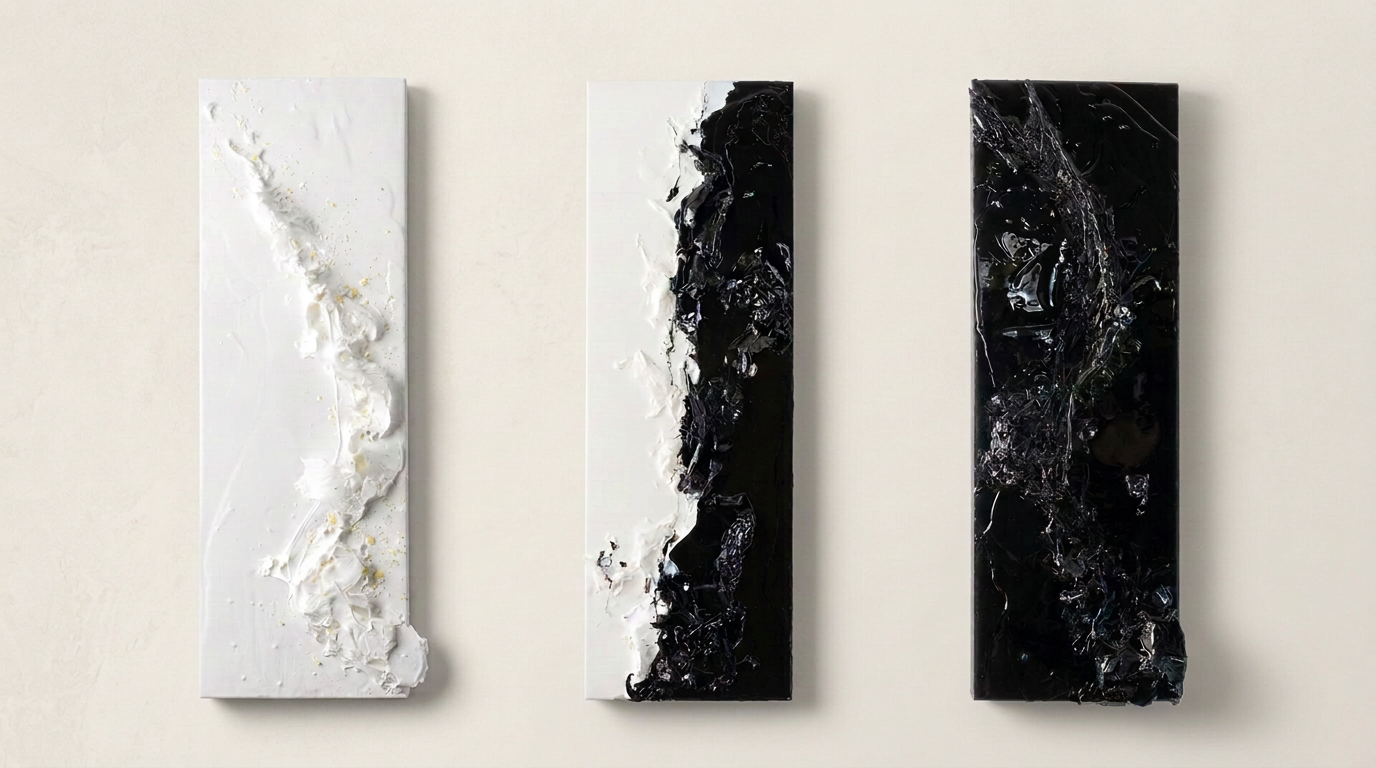
Confrontation brings together three individual wall reliefs shaped by my experiences of living within a body altered by chronic illness, reproductive loss, and cancer. Each work confronts a different relationship between the body and what can be known, controlled, endured, and ultimately accepted.
Light, darkness, material, and physical distortion give form to experiences that are often difficult to see from the outside. Emerge considers chronic migraine and a brain that continues to change with time. Acquiesce traces the uncertainty and complexity of my reproductive health and the losses held within it. Turbulence gives physical presence to the persistent pain and unanswered questions of fibromyalgia.
Together, the three works form Confrontation, the work for which the larger series was named. They share a history and a visual language, but each remains a complete work in its own right.
They are not a triptych, but may be viewed individually or together.
Confrontation
Emerge, 2019
White on white - Cast polyurethane on birch cradle
36 x 12 x 2 in (91.44 x 30.48 x 5.08 cm)
Acquiesce, 2019
White and Black - Cast polyurethane on birch cradle
36 x 12 x 2 in (91.44 x 30.48 x 5.08 cm)
Turbulence, 2019
Black on Black - Cast polyurethane on birch cradle
36 x 12 x 2 in (91.44 x 30.48 x 5.08 cm)
Emerge, 2019
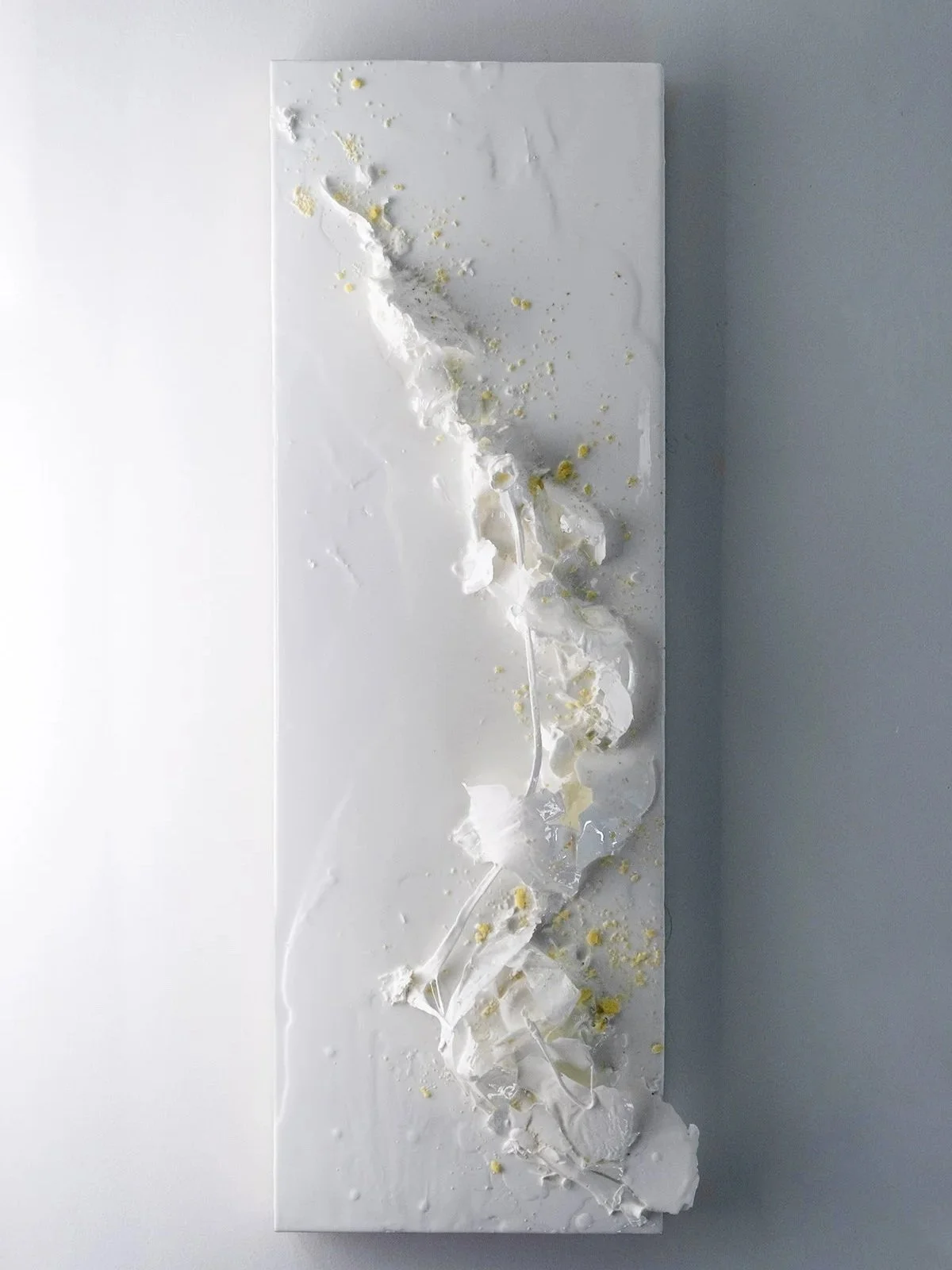
Emerge reflects my experience of living with chronic migraines. When I created the work, its surface was entirely bright white, but I deliberately used different types of polyurethane, some of which continue to yellow with age. The sculpture was never intended to remain visually static.
Light is central to this work because it is also one of the largest triggers of migraine pain. It reveals the differences in texture, depth, and translucency across the white surface while simultaneously representing something capable of causing intense physical distress.
As the materials age, some areas become more pronounced while others recede. That continuing change reflects my experience of how time and age affect the brain: symptoms shift, sensitivities change, and what once dominated can diminish as something else becomes more apparent.
Emerge is therefore not a fixed representation of chronic migraine. Its material transformation allows the work to continue changing alongside the body and brain it was created to represent.
Acquiesce, 2019
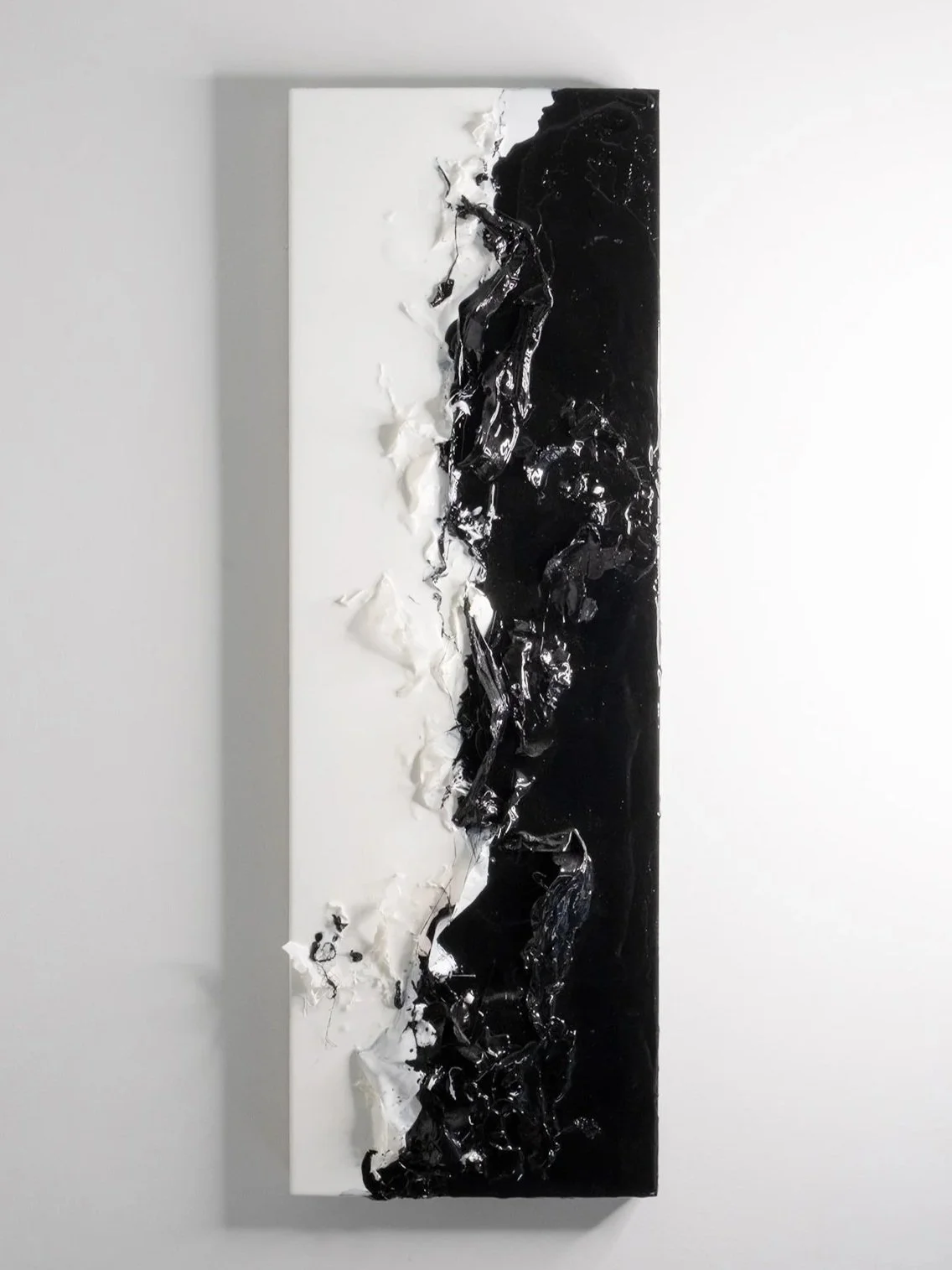
Acquiesce grew from my lifelong experience with reproductive health, including problems that began with the onset of my menstrual cycle, multiple miscarriages, and the eventual discovery of cancer.
Pregnancy is often treated as an isolated event that begins with a fertilized egg. My experience taught me something very different. Pregnancy exists within an entire reproductive system that prepares, regulates, matures, sustains, and changes the body long before conception occurs. For me, that larger process held many points of uncertainty, loss, and physical peril.
I created Acquiesce in black and white because my experience existed between what was known and what remained unseen. The two sides push into one another rather than forming a clean division. Their boundary fractures, folds, and becomes entangled, much as individual events in my reproductive history could not ultimately be separated from the larger system in which they occurred.
Light reveals portions of that turbulent boundary while leaving others obscured. Acquiesce is my recognition that I could never fully understand or control everything happening within my own body. Its title comes from the difficult process of accepting that reality - not as surrender, but as an acknowledgment of what I had lived through.
Turbulence, 2019
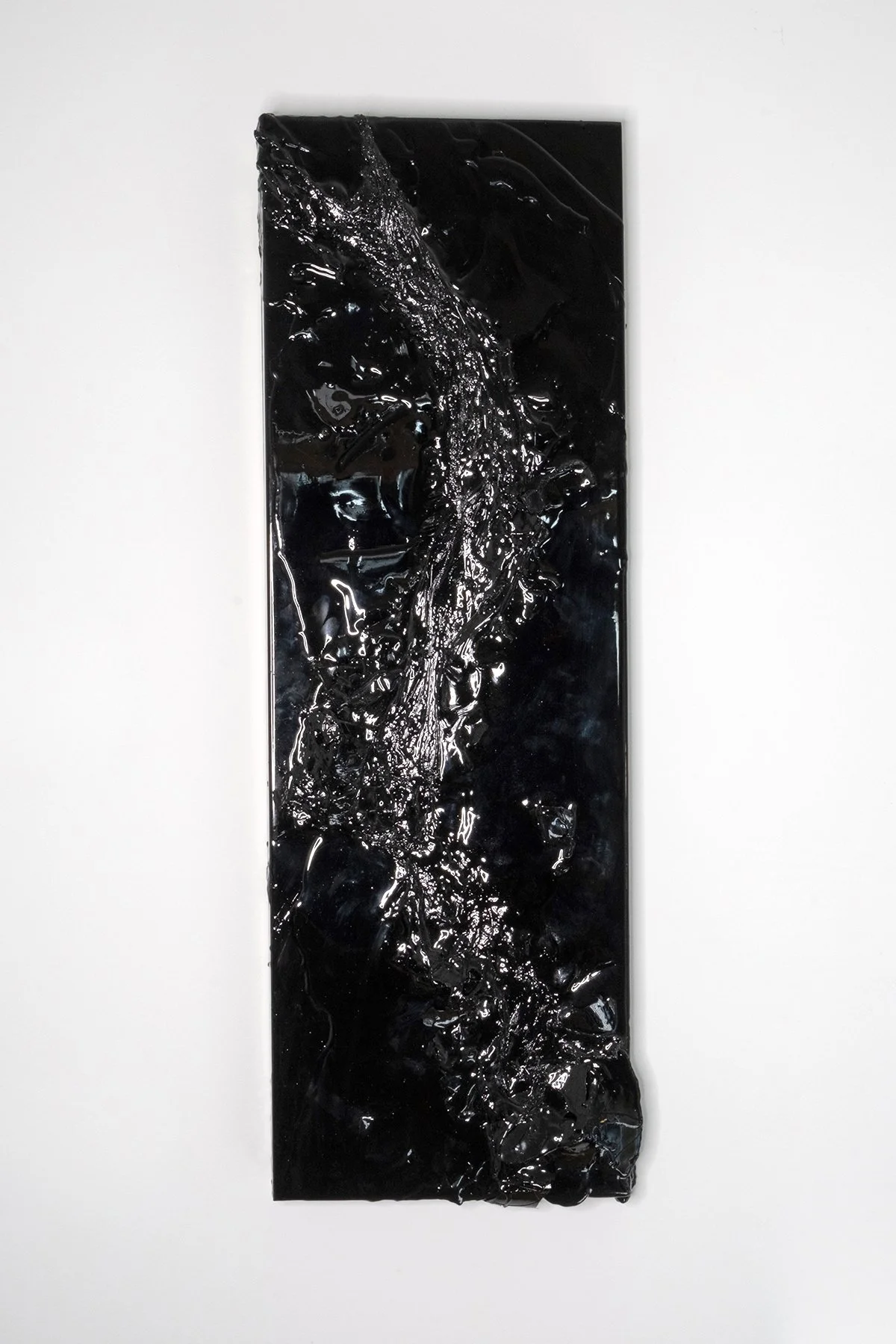
Turbulence gives form to my experience of living with fibromyalgia. I cast the work entirely in reflective black, creating an unsettled surface of folds, fractures, ridges, and disruptions that catches fragments of light without ever relinquishing its darkness.
The work itself is intentionally warped rather than flat. I wanted the physical structure to engage the depth and distortion of chronic pain rather than simply place pain on a surface for observation. The object is altered by what it carries, just as persistent pain changes the experience of inhabiting a body.
The darkness is equally intentional. Fibromyalgia remains a condition with significant unanswered questions for both the people living with it and the medical practitioners treating it. Light moves across the reflective black surface but cannot fully illuminate its depths.
For me, Turbulence exists within that uncertainty. Its darkness, distortion, and changing reflections give physical presence to pain that can dominate daily life while much about its underlying mechanisms remains unknown.
Garden of Cancer
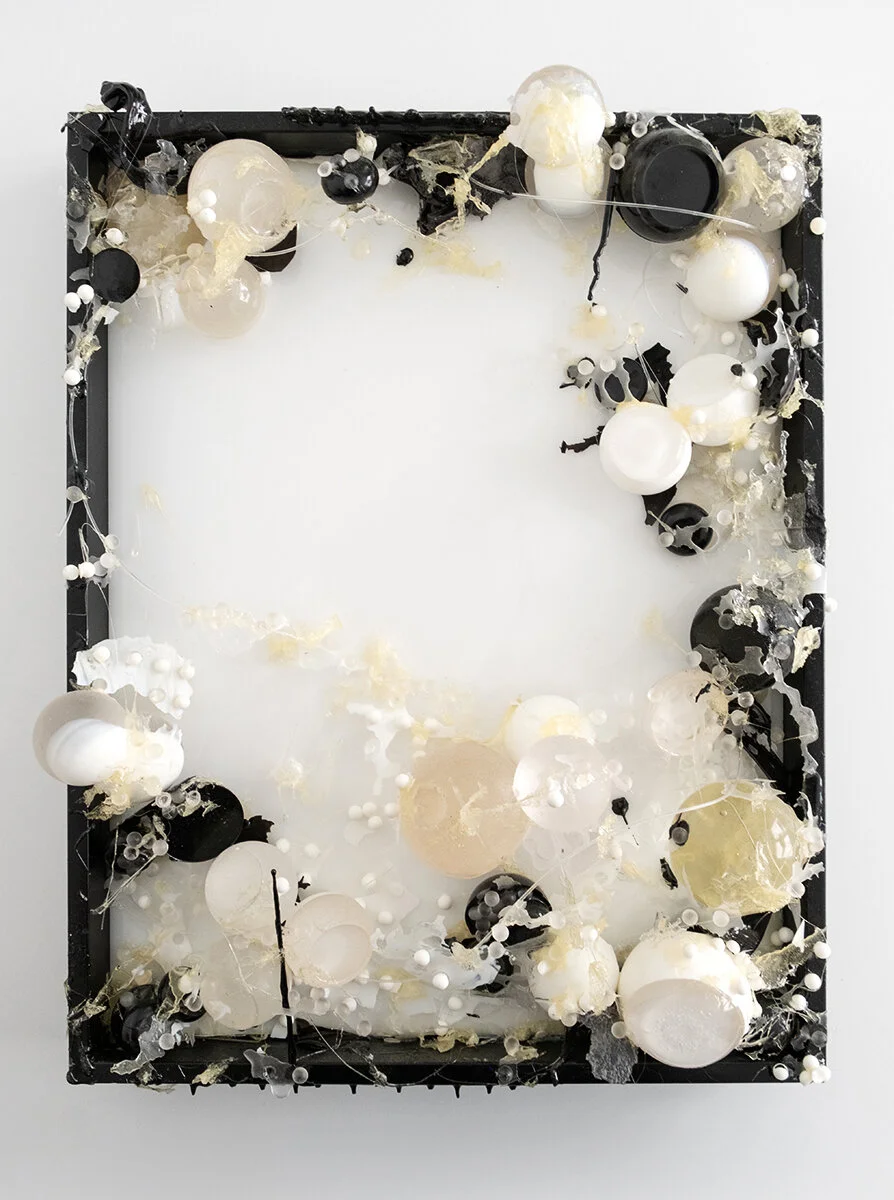
2020 - Cast epoxy, polyurethane, and nylon in acrylic shadowbox
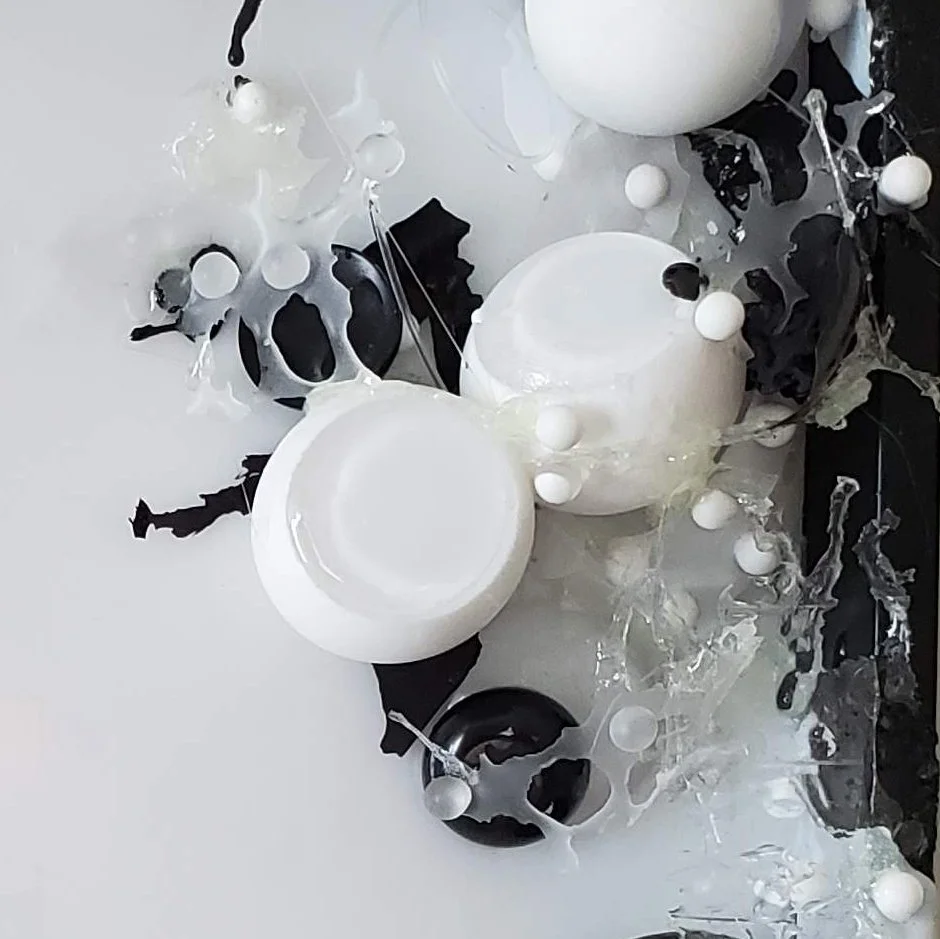
Garden of Cancer reflects my experiences with cancer and treatment up to the time of its creation. Its accumulating forms turn those experiences into a contained but proliferating landscape. A few months after completing the work, I was diagnosed with breast cancer.
Irreparably damaged during Hurricane Helene, 2024
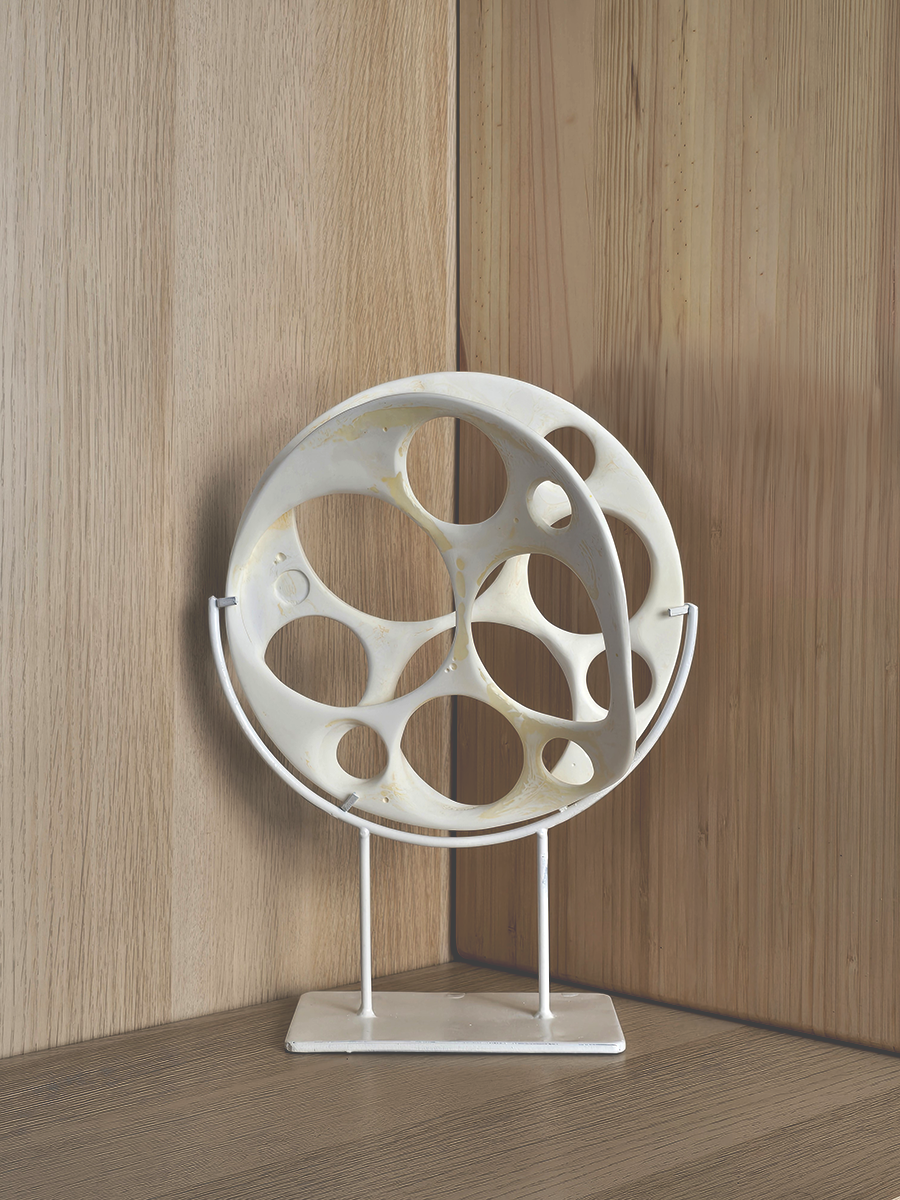
Shedding
2022 polyurethane sculpture
10 x 10 x 5 in (25.4 x 25.4 x 12.7 cm)
14 in (35.6 cm) overall height with base
Shedding reflects the loss, recognition, and rebuilding of identity that accompanied my experience moving through cancer treatment and into the person I became afterward. One form appears to shed away from another, connected by a shared origin yet inherently different from what remains.
Light moves through and between the carved forms, revealing their connection while emphasizing the spaces that separate them. The work considers renewal not as a return to who I was before, but as the recognition of a changed self shaped by what came before.
Shedding marks the conclusion of the Confrontation series while also becoming a point of departure for After the Divide, a photographic series that uses the sculpture to explore light, shadow, and shifting perception. In this way, the work moves beyond its original sculptural form, creating a bridge between two bodies of work.
Explore After the Divide →