
When Grief Rises Quietly: Ascension
I was sitting in a podiatrist's chair when Ascension came back to me.
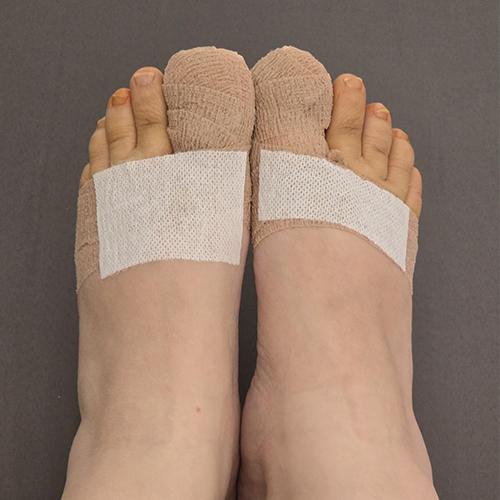
The day before writing this, I had spent two hours receiving treatment, one foot at a time. As I concentrated on breathing through the injections, I found myself remembering other moments when I had consciously relied on my breath: labor, panic, running track in high school while my father coached me through each stride.
Then I remembered him.
More specifically, I remembered the moment I realized my father had died. His breath had stopped, and suddenly I was thinking about my own.
Memory can return through the body in unexpected ways. I had gone to an appointment for something entirely unrelated to my father, yet the physical act of concentrating on my breathing connected these seemingly unrelated moments across decades of my life.
That experience brought me back to Ascension.
Ascension is part of Holding Pattern, a series of eight drawings created during the period surrounding my father's care, death, and its aftermath. The works developed at different points within that experience, and Ascension came from thinking about the transition between someone's physical presence and their absence.
My father's death was brief. There was a final breath, and then there wasn't another.
What stayed with me was the enormity of the change contained within such a small physical moment. Someone can occupy space in the world for decades, and then a single breath becomes the dividing line between presence and memory.
The colors in Ascension reflect how I thought about that transition. Yellow enters the drawing as a color I associate with joy, while softer blue-green forms move through the composition with a greater sense of quiet and release. The work is noticeably brighter than Ghosts in the Afterlife. Although both drawings emerged from my father's death, they approach his absence differently. Ghosts looks toward what remains afterward. Ascension focuses on the moment of transition itself.
My father had his own beliefs about what death meant. He believed he would be reunited with his parents, and that belief shaped how he approached the end of his life. I cannot know what happened beyond the physical moment I witnessed, but I can acknowledge what that belief meant to him and how it affected the way I experienced his death.
That distinction matters to me in this drawing.
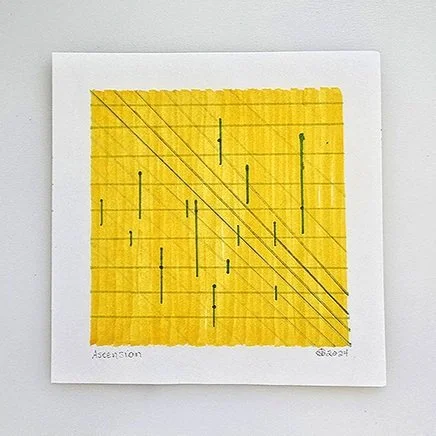
Ascension isn't an attempt to describe an afterlife or explain what happens when someone dies. It is my response to witnessing the boundary between presence and absence, filtered through my memories of my father and my understanding of what he believed awaited him.
The title came from that sense of movement.
The composition has upward energy, but it doesn't feel forceful to me. The marks seem to gather and move rather than disappear. The drawing allowed me to approach death not only as an ending, but as a transition I was still trying to understand.
Months later, sitting in a doctor's office and concentrating on my own breathing, that memory surfaced again. Breath connected moments that otherwise had very little in common: my father coaching me as a teenager, my own experiences of pain, and the moment I recognized that his breathing had ended.
That is one of the things I continue to learn about memory. It does not always return when you invite it. Sometimes a sensation, material, color, place, or physical action opens a door without warning.
For me, that day, it was simply breathing.
And suddenly I understood Ascension a little differently.
